Latest News
AI Generated
The West Coast Express; Metro Vancouver’s least known transit system

Published 3:54 PDT, Thu July 30, 2026
Last Updated: 3:56 PDT, Thu July 30, 2026


-
You may have heard of the West Coast Ex-
press, but what do you really know about this
form of transit? This article will provide an
overview of what you need to know about the
West Coast Express.
What is the West Coast Express?
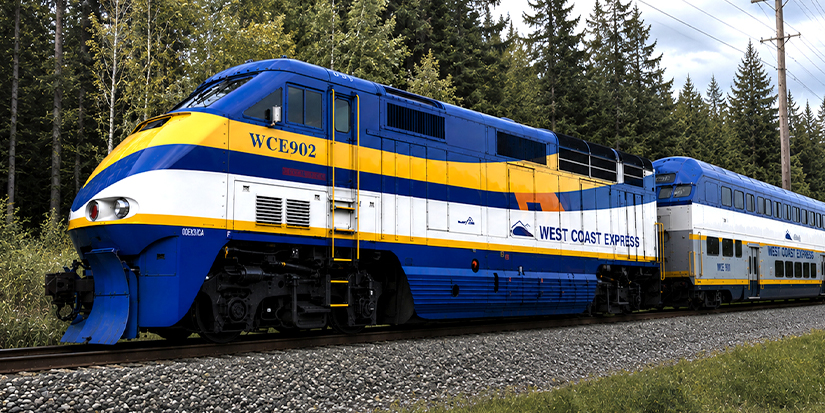
The West Coast Express, or WCE, is a diesel
commuter train that stretches for approximate-
ly 69 kilometres for a one-way trip. On board
each two-story train there is a bathroom as well
as plenty of seating to make your 75-minute
commute as comfortable as possible.
When do trains run?
Unlike the other trains in the city, the West
Coast Express only runs 10 single-direction
trains during the morning and evening. In the
morning, 5 trains leave from Mission and go to
Waterfront, and then in the evening 5 return
from Waterfront to Mission. This means there
are five different times you can catch the train.
While this is very useful to passengers who are
travelling that route, it means that it has a
lot less applicability than, say, the Expo Line,
which runs trains throughout the city all day
in either direction.
Where are the stations?
The West Coast Express has a total of 8 stops
all spread out throughout the Lower Main-
land of BC.
Waterfront
This is probably the most well-known stop
along the West Coast Express, right in the
downtown of Vancouver. When you get off of
your train, you will be on a long platform next
to the Waterfront train yard. From there, a brief
walk will take you to the Waterfront Station,
with connections to the Canada Line, Expo
Line, and SeaBus, as well as food options.
Port Moody
The second stop along the West Coast Express
is Port Moody. Like most stops on the West
Coast Express, it is a covered open-air train
station that is close to multiple food options,
parks, buses, and even the Moody Centre train
station. For those who drive to the WCE in the
morning, there is a parking lot to leave your car
while you venture off to the city for the day.
Coquitlam Central|
Coquitlam Central is the next stop along this
route. If you choose to get off the train or this
is your destination, you are greeted by a nice
open-air station sheltered by trees. But no
more than five minutes away are a few food op-
tions and connections to the Millennium Line
as well as buses. A huge perk at this stop is the
spacious parking lot so you can park and go.
Port Coquitlam
The Port Coquitlam station is an open-platform
station that sits adjacent to both a bus loop
and a train yard. This does mean that it can be
fairly noisy at times. For commuters driving to
this station, the lot fills up quickly on weekday
mornings, so arrive before 7 AM if you want a
parking spot close to the platform.
Pitt Meadows
The middle point of the journey is the Pitt Meadows
station. It’s well-situated right off the Lougheed
Highway and a short walk from a handful of cafes,
restaurants, and shops. The parking lot is decently
sized, but it can fill up on busy weekdays.
Maple Meadows
Maple Meadows station is a simply designed
station with a single open platform. It's located
near several industrial businesses, though you
won't find much dining or shopping nearby the
stop. The parking lot is reasonably sized and
tends to have spots available even mid-morn-
ing, which is a nice change from busier stations
along the line.
Port Haney
The second-to-last stop is Port Haney. When
you get off the West Coast Express, this sta-
tion is covered and has a nice lookout onto the
Fraser River. However, once you leave the stop,
you won't find any shops, cafés, or major attrac-
tions within walking distance of the station.
Mission City
The final stop along the route on the WCE is
Mission. When you exit the train, there isn’t a
station to go to, but there is instead a platform
that is beside a street. While this does feel a
little anticlimactic for the last stop, there is a
pedestrian overpass and a thrift store close by.
Theoretical route
Say you wanted to ride the West Coast Express.
Here is a hypothetical route from Mission to
Waterfront. The second train departs at 5:55
am, so you drive to the Mission train station
for 5:45. After parking your car for only $3.00,
you walk over to the station and pay at one of
the two Compass Card readers at the entrance.
After a short wait, the train arrives. 75 minutes
later, the WCE arrives in downtown Vancouver
at 7:10 am, and you’re ready to start your day.
How much does it cost to ride it?
Due to the West Coast Express travelling much
farther than a city train, it also means that its
prices are affected. For a 5-zone fare from Mis-
sion to Vancouver and back, you are looking at
about $27. While this price may seem extreme
at face value, when you compare it to the cost
of parking a car downtown, it comes out look-
ing more favourable. This fact may be why 2.6
million people use this form of transportation a
year to commute to Vancouver.
While the West Coast Express is an under-utilized
service, the future seems promising. With trains
running through the Lower Mainland, we can get
more people travelling than ever before. While
Translink has not announced any plans for ex-
pansion on this route, it is undeniable that many
would benefit from full-day access to this service.
For the time being, though, you are now informed
on the ins and outs of the West Coast Express.



































































































2 Hours of free financial consulting
Jai Xin Planning Ltd.
C$120.00 C$0.00
Use any of our home staging service and get a second month rental for free!
MiiX Interiors
C$500.00 C$0.00

Get 10% off any order
Phantom Screens Lower Mainland
C$200.00 C$180.00