Business
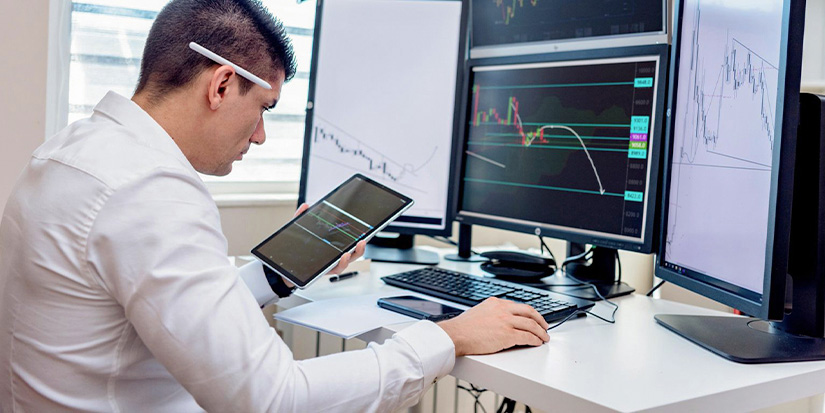
Photo courtesy alphatradezone
Understanding Recessions in Canada - And Why Numbers Don’t Tell the Whole Story

Published 3:53 PDT, Fri July 17, 2026
Last Updated: 3:35 PDT, Tue August 11, 2026


-
BY BEZ CHAO
The term “recession” often carries a lot of weight in public discussion and tends to invoke a sense of panic. To many people, it often suggests widespread job loss, struggling businesses, declining incomes, and economic uncertainty. Despite how frequently the term appears in headlines, recessions are often more complex than many people realize. Understanding what a recession is, how it is measured, and why different Canadians can experience the same economy in different ways can provide a better understanding of economic conditions than a simple label alone.
In simple terms, a recession refers to a significant and sustained decline in economic activity. The difference between a recession and a depression is the severity. A recession is a shorter term economic slowdown, whereas a depression is a more severe and prolonged economic catastrophe. Many people are familiar with the commonly cited rule that a recession occurs when a country experiences two consecutive quarters of declining Gross Domestic Product (GDP) – which measure the total value of goods and services produced with- in an economy – but declaring and identifying a recession is much more nuanced than that. In practice, assessing whether an economy has entered a recession involves examining a broad range of data, including employment levels, consumer spending, business investment, industrial production, and household income.
GDP is perhaps the most widely recognized economic indicator. It measures the total value of goods and services produced within a country over a specific period of time. When GDP is growing, businesses are generally producing more goods and services, while declining GDP can signal that economic activity is slowing. GDP is often used as a starting point when discussing recessions because it provides a broad overview of economic output. However, GDP is not a measure of individual well-being. Economic output can increase even if some households continue to struggle with affordability challenges, and statistics like population growth can sometimes cause overall GDP to rise even when economic gains on a per-person basis are more modest.
The labour market data is one of the key indicators. Economists closely monitor employment levels, unemployment rates, job vacancies, and labour force participation to assess the health of the economy. This is because during periods of economic weakness, businesses may reduce hiring, cut hours, or lay off workers in response to declining demand. Rising unemployment is therefore often associated with recessions. However, employment statistics also have limitations. A person may be counted as employed even if they are working fewer hours than desired, holding multiple jobs to make ends meet, or working in a position that pays significantly less than previous employment. For this reason, economists often look beyond the headline unemployment rate to gain a more complete understanding of labour market conditions.
Consumer spending refers to the purchases households make on goods and services, ranging from groceries and clothing, to entertainment and travel. Because consumer spending represents a significant portion of economic activity, changes in spending patterns can provide valuable insight into the economy's health. When households feel confident about their finances, they are generally more willing to spend. Inversely, when people become concerned about job security, rising costs, or economic uncertainty, they may reduce discretionary spending and focus on essential purchases. A widespread slowdown in consumer spending can therefore be an early sign that economic conditions are weakening. It’s important to note that spending data does not always reveal why spending patterns are changing. Consumers may spend less because they are worried about the future, but they may also spend less because rising prices leave them with less disposable income.
Businesses constantly make decisions about whether to expand operations, purchase equipment, develop new products, or hire additional workers. These investments often reflect expectations about future economic conditions. When businesses are optimistic about future demand, they are more likely to invest in growth. When uncertainty increases, investment plans may be delayed or cancelled. Because these decisions are often forward-looking, business investments can provide clues about where the economy may be heading rather than simply where it is today. A decline in business investment may signal concerns about future profitability, consumer demand, borrowing costs, or broader economic conditions.
Income data helps economists assess whether households are seeing meaningful financial gains over time. Rising incomes generally sup- port consumer spending and can contribute to higher living standards, while stagnant or declining incomes may place pressure on household finances. However, income statistics can be difficult to interpret in isolation. On paper, income growth may appear positive, but if prices are rising faster than wages, households may actually experience a decline in purchasing power. Economists therefore often examine income alongside inflation to understand whether Canadians are truly becoming better off financially.
Income data can also reveal how economic gains are distributed across different segments of society. Growth that is concentrated among a relatively small portion of the population may produce different outcomes than growth that is broadly shared.
No single indicator can determine whether an economy is in a recession. GDP may show growth while consumer spending weakens. Employment may remain strong while business investment declines. Household incomes may rise even as inflation erodes purchasing power.
For this reason, economists rely on multiple indicators rather than any single measurement. By examining economic output, labour markets, spending patterns, investment activity, and household incomes together, they can build a more comprehensive understanding of economic conditions and determine whether signs of weakness are broad enough to suggest a recession may be occurring.
Despite all this data, recessions can still be difficult to identify because economic data takes time to collect and analyze due to the nature of this information being backwards-looking. Data and statistics are often reported weeks or months after economic activity has occurred, and initial estimates are frequently revised as more complete information becomes available. As a result, recessions are often easier to identify in hindsight than in real time. This may result in a disconnect between official economic assessments and public perception or experience. Households may already be feeling financial pressure and strain long before economists determine whether a recession has officially occurred. It is also possible for economic conditions to start improving before those changes become fully reflected in the data as well.
This also explains why so much emphasis is placed on the stock market as an unofficial economic indicator even though the stock market isn’t a completely accurate reflection of how the economy is doing. The reason for this is because the stock market is a highly visible, real-time data source, unlike major economic data points like GDP or unemployment figures which are only published monthly or quarterly. It also does directly influence how comfortable consumers feel about spending. When stock portfolios rise, people feel wealthier and spend more freely, driving economic expansion. Inversely, when the stock market crashes or contracts, consumers see their net worth shrink on paper, causing them to cut back on spending which can turn a mild economic slowdown into a more severe recession.
It’s also worth noting that these economic indicators are designed to measure broad trends across an entire country. They are useful for understanding the economy at a national level, but they do not necessarily capture the experiences of individual households, communities, or industries.
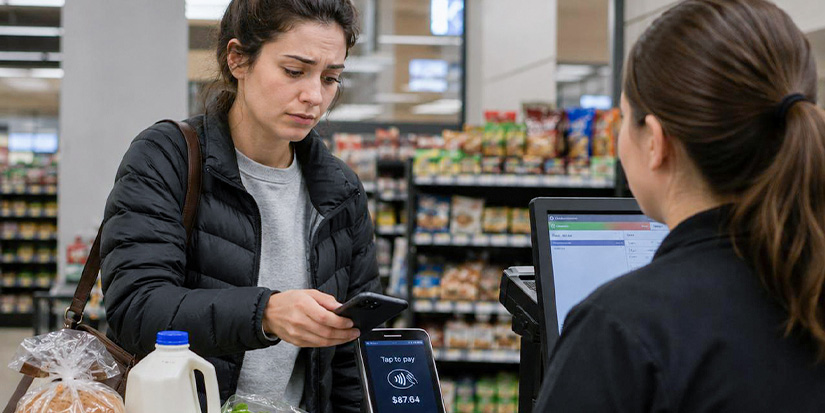
This explains why discussions about the economy can sometimes feel contradictory. These broad economic indicators may suggest stability or growth while many Canadians continue to face affordability challenges. Things like housing costs, grocery prices, debt payments, and other household expenses can place significant strain on family budgets even when broader economic measures remain positive. In this sense, the absence of an official recession does not necessarily mean that all Canadians are experiencing favourable economic conditions.
This has led to the idea or concept of a “K-Shaped Economy” gaining attention in recent years.
The term describes a situation in which different groups experience economic conditions in vastly different ways. Following an economic shock or period of uncertainty, one segment of the population moves upwards, benefiting from rising incomes, appreciating assets, or expanding opportunities, while another segment moves downwards, facing financial strain, stagnating wages, or declining opportunities. The resulting divergence resembles the shape of a letter K, hence the name.
This concept of a K-shaped economy helps ex- plain why economic debates can be so difficult to reconcile. A homeowner who has benefitted from rising property values may view economic conditions quite differently than a renter struggling with increasing housing costs. A worker in a growing industry may feel optimistic about future opportunities, while someone employed in a sector facing layoffs or slower growth may have a more negative outlook. Both individuals are responding to the same economy, yet their experiences differ dramatically.
These differences are particularly important to keep in mind when using the same methodology used to measure past recessions as a guide- line for assessing today’s economic conditions.
While historical downturns such as those of the early 1980s, early 1990s, and 2008 provide valuable context, Canada’s economy has changed significantly over time. For example, housing now consumes a larger share of households budgets for many people, household debt levels are generally higher, and labour markets have evolved through the growth of remote work, contract employment, and digital industries. Population growth and immigration also play a larger role in shaping economic performance than they did in previous decades.
These changes mean that traditional economic indicators can sometimes tell a different story than they might have in the past. For example, overall economic output may continue to grow because the population is increasing, even if gains on a per-person basis are more modest. This distinction has led some economists to pay closer attention to measures such as GDP per capita when assessing living standards and economic well-being.
Again, this is why economists rely on a variety of data and indicators to help paint a more complete picture of economic conditions.
Yet, despite this broad range of information, public discussions often return to a simple question: Is Canada in a recession or not? While the answer can be useful for identifying broad economic trends, as we now know, it can also oversimplify reality. An economy may avoid meeting technical criteria associated with a recession while still experiencing slow growth, affordability pressures, weak productivity, or declining purchasing power. Likewise, certain regions or industries may face significant challenges even when national indicators signal that the economy is relatively stable. Although Statistics Canada has confirmed the economy slipped into a technical recession after real GDP fell by an annualized rate of 0.1% in the first quarter of 2026, following a downwardly revised 1% contraction in the fourth quarter of 2025, experts are still split on calling it a true recession. Some experts are claiming that it is too soon to declare a formal recession as current weakness isn’t considered broad or persistent enough, and advance estimates for April 2026 suggest the downturn may be short lived.
Ultimately, recession classifications remain valuable tools for understanding economic cycles, but they are not complete descriptions of economic reality. They provide a framework for measuring broad trends, yet they cannot and do not fully capture the diverse experiences of millions of Canadians living in different circumstances. Understanding the economy requires looking beyond a single label and recognizing both the strengths and limitations of the data used to describe it.

























.jpg)






























.jpg)
















.jpg)

















.jpg)










2 Hours of free financial consulting
Jai Xin Planning Ltd.
C$120.00 C$0.00

Use any of our home staging service and get a second month rental for free!
MiiX Interiors
C$500.00 C$0.00

Get 10% off any order
Phantom Screens Lower Mainland
C$200.00 C$180.00