Latest News
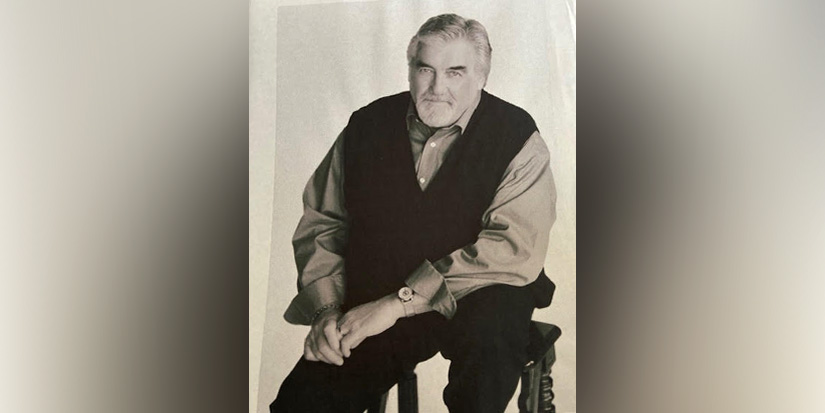
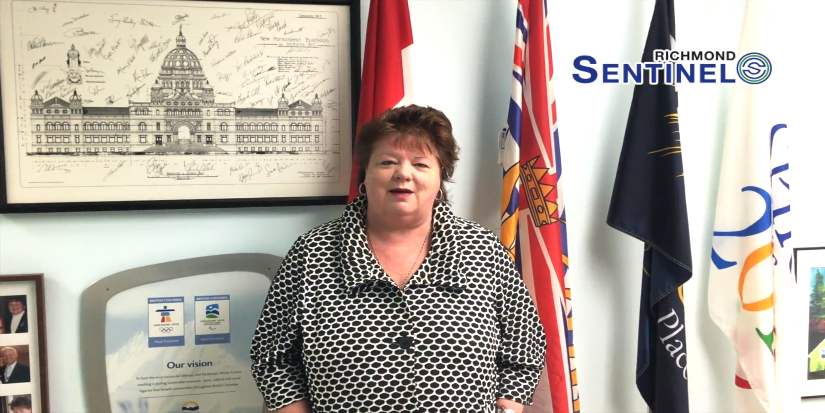
Media relations and Marketing Consultant Greg Douglas
Photo provided Greg Douglas
Decades of local horse racing comes to an end

By Joe Leary
Published 11:58 PST, Mon January 26, 2026


Joe Biz
It’s a sad commentary when something so ingrained in the fabric of local culture suddenly disappears. Such was the case in early December with word of the immediate closing of Hastings Racecourse, ending 132 years of horseracing in British Columbia.
While the news sent shockwaves through Vancouver’s sporting and entertainment community, the deepest impact is felt by those whose livelihoods have long depended on the historic facility. Media relations and Marketing Consultant Greg Douglas has had a long and storied relationship with the track and was quite vocal with his thoughts. “With Great Canadian Entertainment showing no interest in renewing its lease with the City of Vancouver to continue operating Hastings Racecourse and the Provincial Government eliminating slot machine revenues, it leaves the racing community out in the cold. “Little or no thought was given to the hundreds of people at the track,” he adds. “Words such as “shock, anger and uncertainty” have been expressed by racing officials in light of the recent developments.”
For well over a century, Hastings Park wasn’t simply a venue for horse racing — it was an ecosystem. With operations abruptly halted, hundreds of individuals face uncertain futures as victims of collateral damage. At the centre of the fallout: the horsemen: trainers, jockeys, exercise riders, grooms, stable hands and pari-mutuel workers whose lives revolved around the track. A single racing stable might employ anywhere from a handful to a dozen or more workers.
With numerous barns operating during the season, the number of backstretch employees affected reaches well into the hundreds. Many of these workers live season-to-season, relying on race purses and stable wages. Without a functioning track, their skills — highly specialized and not easily transferable offer few immediate alternatives. “It was roughly two months ago when I shared with the Horsemen’s Benevolent and Protective Association of BC a letter to the editor that I was hoping to submit to Post-media,” adds Douglas, who is about to be inducted into the BC Horse Racing Hall of Fame in the Builders Category. “It concerned the future of the thoroughbred horse racing industry in British Columbia at Hastings Racecourse on the PNE grounds, the longest continuously active professional sports facility in Vancouver history”.
It was suggested that Douglas hold off on sending the letter. “Their theory (HBPA) was it could ruffle some feathers in Victoria since the horsemen’s association was continuing to pursue an in-person plea with the Ministry of Public Safety and Solicitor General to discuss provincial financial support as in past years. The meeting finally took place August 14 with little being resolved other than both parties suggesting it was “positive”, a word we so often hear in political circles”.
The Hastings Racecourse closure also places enormous strain on owners, many of whom invest heavily in the sport - not for profit, but for passion. Maintaining a racehorse is expensive and an abrupt halt in the racing program now forces owners to relocate their horses to other jurisdictions such as Alberta or Washington. This not only adds cost but uproots the entire network of people tied to each horse. Trainers who have spent decades building careers at Hastings must contemplate moving elsewhere to continue working, often leaving families behind. “There was a time when the provincial government’s agriculture arm would willingly budget an annual grant to ensure the ongoing survival of the horse racing industry in British Columbia,” adds Douglas. “It has been estimated that between Hastings Racecourse and Fraser Downs Racetrack thousands of onsite employees and suppliers have depended on the industry far beyond the barns. Hastings supported an intricate web of businesses and work”.
Perhaps the most intangible impact is cultural. Hastings Racecourse was one of Vancouver’s longest-running institutions, connecting the city to its own sporting heritage. Its sudden closure doesn’t just disrupt jobs — it marks the end of a tradition that shaped memories, forged careers and built a close-knit community. What remains now are hundreds of workers searching for stability, thousands of fans mourning a lost landmark, and an industry grappling with the disappearance of one of its most enduring homes.
Horse racing’s history in British Columbia goes back 132 years to when the first-ever Vancouver City Stakes was staged at a site that would become Howe Street, where a horse named ‘Mayflower’ won a first-place purse of $250. Today, unlike the Vancouver Canucks, BC Lions and Vancouver Whitecaps, there are no racing-related revenues from television and radio rights, ticket sales, concessions, souvenir shops and parking fees. There hasn’t been an admission fee at Hastings Racecourse or Fraser Downs in Cloverdale for the past two decades. BC’s only two racetracks have been basically relying on their adjacent Great Canadian Casinos to keep them afloat financially. “Until recently I worked in a public relations and marketing role at Hastings Racecourse for several years – 20 in total”, says Douglas. “I know what government financial support means to the hard-working and enormously dedicated people – male and female – within the horse-racing industry.
“What I do not know is why they are suddenly the forgotten people”.









































































































































2 Hours of free financial consulting
Jai Xin Planning Ltd.
C$120.00 C$0.00

Use any of our home staging service and get a second month rental for free!
MiiX Interiors
C$500.00 C$0.00

Get 10% off any order
Phantom Screens Lower Mainland
C$200.00 C$180.00